Craft · · 9 min read
The formula behind Shorts that blow up — stop the thumb in one second, hold them to the end, make them watch again
How viral Shorts work—what feeds measure (swipes, watch time, rewatches, shares), the first second, cut rhythm, captions, loops, 6 structures, 10 hook rewrites.
Shorts Zone editors
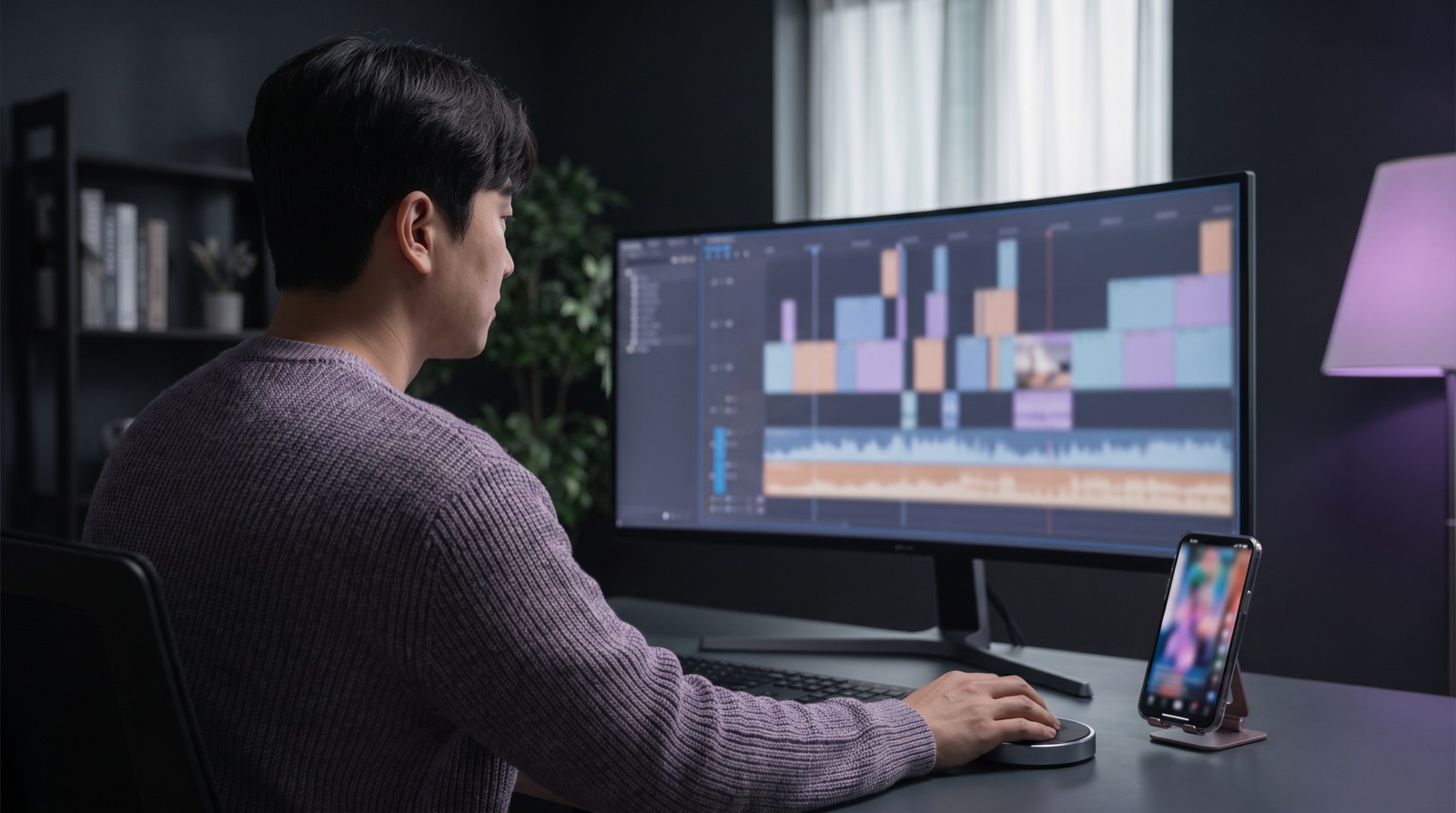
Nobody clicks on a Short. They swipe past it. Long-form gets picked from a thumbnail. A Short arrives already playing, and the viewer passes judgment with their thumb in under a second. Shorts that blow up aren't lucky. They're built to win that judgment.
What the feed looks at before it pushes a video
None of the three platforms publishes the exact recommendation formula. But each has said on the record which signals it uses.
- YouTube says on its recommendations explainer page that it uses signals like clicks, watch time, survey responses, shares, likes and dislikes. Shorts get swiped instead of clicked, so YouTube Studio shows a separate "Viewed vs. swiped away" metric for Shorts.
- TikTok explains in its official post on how it recommends videos that it uses interactions like likes, shares and comments, plus video information like captions, sounds and hashtags, and that watching a video from start to finish is a strong signal of interest.
- Instagram's Adam Mosseri has repeatedly named watch time, sends per reach (how often it gets shared in DMs) and likes per reach as the most important signals for Reels recommendations.
That's where the working creator's formula comes from. It's not an official announcement. It's a working model that turns those signals into production steps.
Spread = Reach × Stop × Finish × Rewatch × Send
The point is that it's multiplication. If any one factor is close to zero, it doesn't spread, no matter how good the rest is. A Short that gets swiped in the first second could have a masterpiece ending, and nobody would ever reach it.
Stage 1, stop: the three layers of the first second
A viewer takes in three things in the first second. Is the screen moving (visual)? What do they hear (audio)? What text is on screen (text)? Plenty of people watch with the sound off, so if even one of the three is empty, the hook gets weaker by that much. All three have to make the same promise.

A · Gets swiped — “Hi everyone So today I'm… going to show you a serum I use”
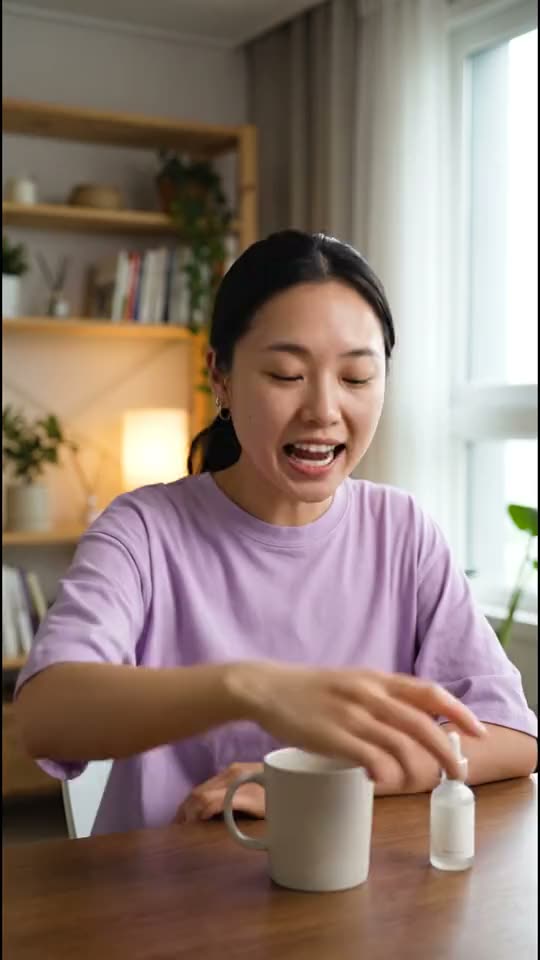
B · Stops the scroll — “Don't buy this serum ₩30,000 down the drain Just one reason The first ingredient”
Same person, same room, same product in both videos. The only difference is the opening. In A, the creator fiddles with the camera, says hello, and looks all over the place. There's no promise in the first second. In B, the product comes up to the lens from the first frame, the first line is the conclusion, and the caption hammers that conclusion home one more time.
You only need three kinds of hooks.
- Lead with the conclusion: Say the outcome of the video in the first sentence. "Don't buy this serum." People stay because they want to know why.
- Break a common belief: Flatly contradict something the viewer believes. "Drinking more water won't make you lose weight." People stay because they want to argue.
- Pull them in with the shot: The picture is strange before anyone says a word. Show the result first, or start at the moment with the most movement.
10 hook rewrites
| Weak first line | Strong first line |
|---|---|
| Hi everyone, today I want to talk about dieting | Doing fasted cardio in the morning like this only burns muscle |
| Let me show you the budgeting app I've been using | I found where ₩380,000 a month was leaking, on this one screen |
| Tips for camping beginners | The #1 piece of gear people throw out after their first camping trip |
| Here's my review of the new earbuds | Where the ₩300,000 pair lost to the ₩50,000 pair |
| I'll show you how to study better | The top student in my class never uses a highlighter |
| Today we're making kimchi stew | Put this in your kimchi stew instead of sugar and it tastes like a restaurant's |
| It's been really cold lately, right? | Leaving your boiler on away mode makes your gas bill higher |
| What I learned from 3 years on YouTube | The most useless thing I did on the way to 100K subscribers |
| Tips for new employees | The one thing a new hire should never say in a meeting |
| Let me show you how I pack for a trip | The folding trick that fits twice the clothes in a carry-on |
Look at what the rewrites have in common and the formula shows itself. There's a number or a specific object, it names a loss or a result, and you can read it in under 2 seconds.
Stage 2, finish: cut rhythm and captions
What carries a viewer who stopped all the way to the end isn't information. It's rhythm. People stay because they expect something else is about to change.
- Change something every 2 to 3 seconds. A cut, a zoom, an angle, a caption color, an object in the frame. This is a rule of thumb among working editors, not an official number. When one person talks to a locked-off camera for more than 10 seconds, the drop-off curve often bends downward.
- Cut the breaths. Every "um," every "uh," and every silence longer than 0.3 seconds between sentences comes out. Trim 3 seconds from a 30-second Short and 10% of the video gets denser.
- Show captions two or three words at a time. One breath per line. Put a long sentence on screen all at once and people read the caption and leave the video. App buttons cover roughly the bottom 20% of the screen and the right edge, so keep captions out of those areas.
- Set a second hook in the middle. Around 40 to 50% of the way through, drop a second hook like "But that wasn't the real problem." That's where the most people drop off mid-video.
Stage 3, rewatch: stitch the ending to the beginning
When a Short ends, it plays again from the top. Use that and you pick up rewatches.
- Put the payoff one beat before the end. The key content (the payoff) lands 70 to 85% of the way through, and the last 1 to 2 seconds end on words that flow naturally into the first line. For example, if the first line is "Don't buy this serum," cut the last line off at "So that's why this serum...".
- Remove the "it's over" signals. "Please like and subscribe," end logos and fade-outs are all signals to swipe.
- Put in something you only catch the second time. A detail on screen that flashes by, a bit of foreshadowing hidden in the first shot. The video with "only got it on the second watch" in the comments is the video that gets rewatched.
Stage 4, send: who will they want to send it to?
Shares come from "this is so you." Since Instagram said publicly that it puts weight on shares per reach, designing for shares has become basic practice for all short-form, not just Reels.

- Make them think of a specific person. "The mistake people make most in their first year living alone," "The reporting habit your manager hates." The viewer immediately thinks of someone to send it to.
- Make it worth saving. Information people will come back to, like checklists, comparison tables and recipe ratios, picks up saves and shares together.
- Leave one thing to argue about. End on a question people disagree on and the comments pile up. But forced provocation erodes trust.
6 proven structures
| Structure | Skeleton | Best for |
|---|---|---|
| Conclusion first | Conclusion (0–2 s) → 2–3 reasons → proof → conclusion again | Information, reviews, tips |
| List | "3 [X]" (0–2 s) → #1 (weakest) → #2 → #3 (strongest) | Recommendations, mistake roundups |
| Before and after | After first, for 1 s → before → compressed process → after | Interiors, cooking, fitness, editing |
| Twist | State the common belief → "But" → counter-evidence → new conclusion | Common knowledge, health, personal finance |
| Debate | Declare your position → reasons → acknowledge the other side → end on a question | Opinions, trends, industry talk |
| Story | The most intense moment → rewind → build-up → ending → one-line lesson | Personal stories, interviews, vlogs |
In the list structure, the strongest item goes last so people watch to the end. The story structure does the opposite and puts the most intense moment first. Both run on the same principle: make the viewer believe there's more coming.
Length: not as short as possible, but as long as it never drags
YouTube Shorts can run up to 3 minutes. There's one rule for choosing length: the shortest length at which you can say this without it dragging even once.
- One idea, one tip: 15–30 seconds
- A claim with two or three reasons, a quick comparison: 30–45 seconds
- A story, one stretch of an interview: 45–60 seconds
- The only thing that can carry all the way to 3 minutes is a story where something keeps happening.
The metric that matters more than length is the average percentage viewed. Most working creators find that a 20-second Short watched for 18 seconds on average does better in the feed than a 50-second Short watched for 25 seconds on average.
Checklist before you make it
- The first second has a change on screen, a first line, and on-screen text
- The first sentence has a number, a specific object, or a result
- No hellos, no self-introduction
- A cut, zoom or caption change every 2–3 seconds
- A second hook in the middle of the video
- The key content lands a little before the end
- The last sentence flows into the first
- Captions avoid the button area at the bottom and the right edge
- After watching, a "person to send it to" comes to mind
If you're cutting Shorts out of a long video, checking every first second by eye is hard. Shorts Zone gives each Short it cuts a separate score for how strong its first 3 seconds are, and if a filler opening weakens it, it trims that sentence and pulls the start point in so the Short opens on a stronger line.
Frequently asked questions
Why do the first 3 seconds of a Short matter so much?
A Short arrives already playing, and viewers usually decide whether to swipe within 1 to 2 seconds. That's why YouTube Studio shows a separate "Viewed vs. swiped away" metric for Shorts. If it gets swiped in the first 3 seconds, the rest of the video never even gets a chance to be judged.
What's the best length for a Short?
There's no right length. The right length is the shortest one at which you can say it without dragging. 15–30 seconds works for one idea, 45–60 seconds for one stretch of a story. Look at the average percentage viewed before you look at length.
How do you make a Short loop?
Put the key content a little before the end, and cut the last sentence off so it flows naturally into the first. Drop closing lines like "please subscribe," end logos and fade-outs.
Do more hashtags get more views?
Hashtags are just information about what the video is about. They can't save a video that gets swiped in the first second. A few that describe the topic accurately are enough. Piling on popular hashtags that have nothing to do with the video can actually show it to the wrong viewers and only raise your swipe-away rate.
How do I fix a Short that isn't getting views?
Start by finding the stage where it leaks. If lots of people swipe away, it's the first second. If the start holds but the curve bends in the middle, it's the rhythm and the second hook. If people watch to the end but it doesn't spread, the problem is the topic and the packaging. The diagnosis is laid out symptom by symptom in Diagnosing Shorts that don't get views.
Starting with your next one
Before you edit your next Short, pull out just the first second and watch it with the sound off. If you can't see what it promises without sound, that video isn't ready to post yet.